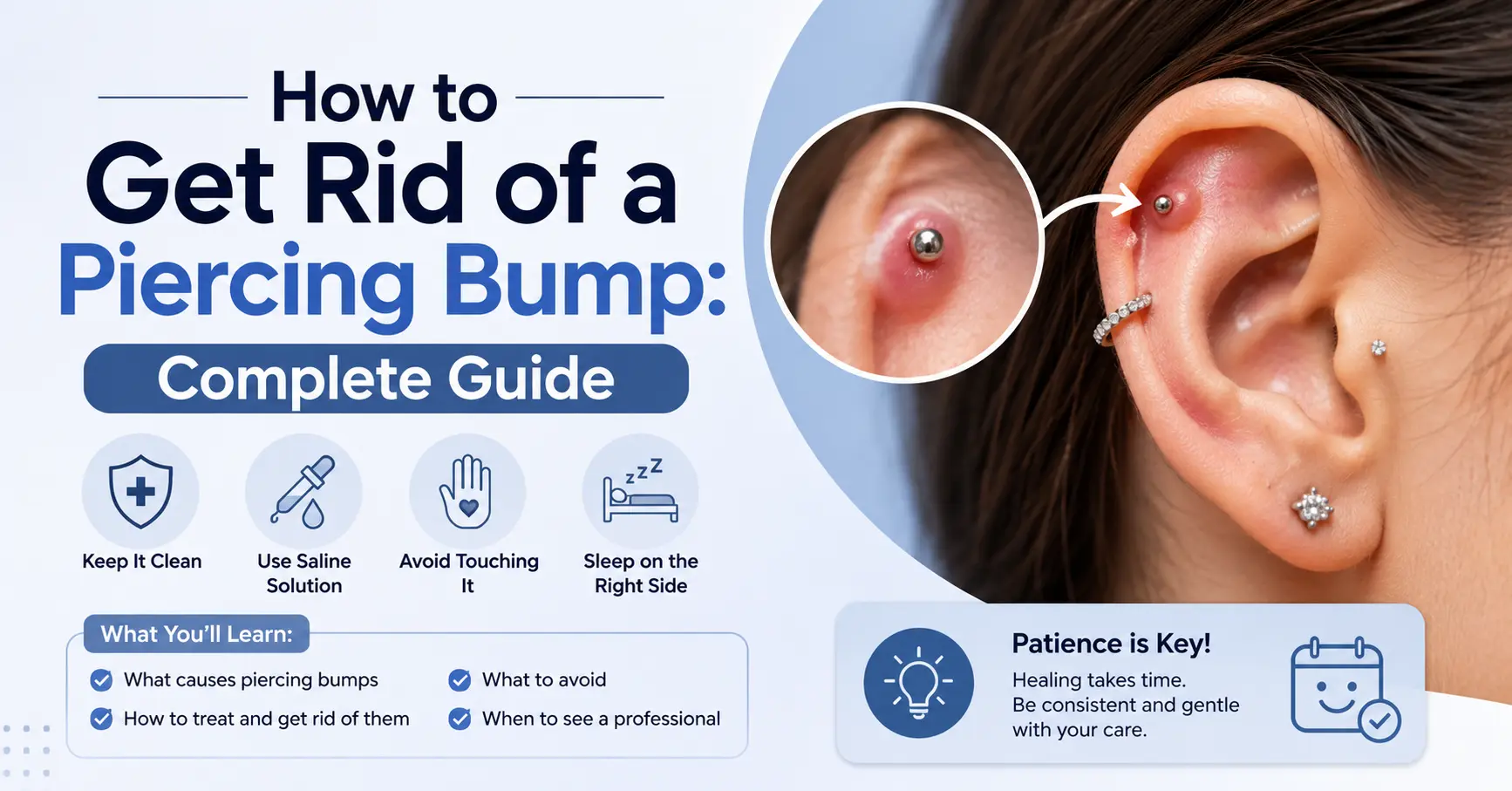

How to Get Rid of a Piercing Bump is a question many people search for after noticing a small lump forming around their piercing. In this blog you’ll learn why piercing bumps develop, how to treat them safely, and what steps you can take to prevent them from returning. Getting a new piercing can be an exciting way to express your personality and style. Whether it is a nose piercing, ear cartilage piercing, lip piercing, or belly button piercing, most people look forward to showing off their new jewelry once the healing process is complete. However, it can be frustrating and concerning when a small bump suddenly appears around the piercing site. Many people immediately assume the piercing is infected or that something has gone seriously wrong. In reality, piercing bumps are a common issue that affects both new and old piercings.
The good news is that most piercing bumps can be treated successfully once you understand what is causing them. These bumps may develop due to irritation, improper aftercare, allergic reactions, pressure from jewelry, or excessive scar tissue growth. Identifying the root cause is essential because different types of piercing bumps require different treatment methods. Using the wrong remedy can sometimes make the problem worse and delay healing.
This guide covers everything you need to know about how to get rid of a piercing bump, including its common causes, effective treatments, and practical prevention tips. By following the right aftercare routine and avoiding common mistakes, you can support faster healing and keep your piercing looking healthy and irritation-free.
Understanding Piercing Bumps
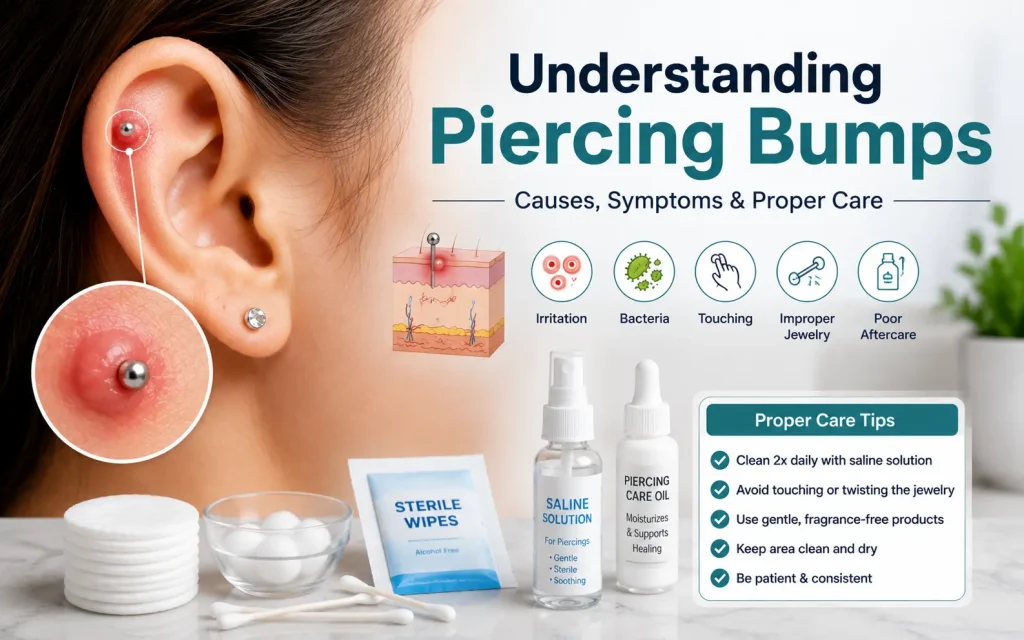
Getting a new piercing is exciting, but discovering a small bump near the jewelry can quickly turn that excitement into worry. Many people immediately assume the bump is infected or permanent, but that is not always the case. A piercing bump can develop for several reasons, ranging from simple irritation to allergic reactions or scar tissue formation. Understanding what causes these bumps is the first step toward treating them effectively.
The good news is that most piercing bumps can be managed with proper care and patience. The skin around a piercing is healing from what is essentially a controlled wound. During this process, the body may react in unexpected ways, creating swelling or raised tissue around the area. While these bumps can look alarming, they are often temporary and improve once the source of irritation is removed.
What Is a Piercing Bump?
A piercing bump is a raised area of tissue that forms around a piercing site. It may appear red, pink, flesh-colored, or slightly darker depending on your skin tone. The bump can be soft or firm and may vary in size over time. According to medical experts, piercing bumps may be caused by irritation, inflammation, allergic reactions, granulomas, or scar tissue formation.
Many people confuse piercing bumps with keloids, but they are not always the same thing. A true keloid is a type of scar that grows beyond the original wound area, while many piercing bumps are simply irritation-related swelling that can heal naturally. Identifying the exact type of bump is important because treatment options differ significantly.
Are Piercing Bumps Normal?
Yes, mild swelling and small bumps are fairly common during the healing process. Fresh piercings often experience redness, tenderness, and slight swelling as the body repairs damaged tissue. These symptoms usually decrease over time, but occasional bumps can still appear if the area becomes irritated.
Think of a piercing like a construction zone. Your body is constantly rebuilding damaged tissue and protecting the area from outside threats. Any disruption, such as touching the jewelry, sleeping on it, or using harsh cleaning products, can slow the healing process and trigger a bump. While some bumps disappear within weeks, others may take months depending on the cause and location of the piercing.
Common Causes of Piercing Bumps
Understanding why a bump formed is crucial because treating the wrong cause can make the problem worse. Several factors contribute to piercing bumps, and identifying the source can speed up recovery.
Irritation and Trauma
Irritation is one of the most common reasons a piercing bump develops. Constant touching, twisting, snagging on clothing, sleeping on the piercing, or accidentally bumping it can inflame the tissue. Even something as simple as using headphones on a cartilage piercing may create enough pressure to cause swelling.
When irritation occurs repeatedly, the body responds by producing extra tissue around the piercing. This protective reaction can create a noticeable bump. The solution often involves removing the source of irritation and allowing the area to heal naturally.
Allergic Reactions to Jewelry
Not all jewelry materials are skin-friendly. Nickel is one of the most common causes of allergic reactions in piercings. If your body reacts to the metal, you may notice itching, redness, dryness, or a persistent bump around the piercing site.
Switching to high-quality materials such as implant-grade titanium, surgical stainless steel, or solid gold can often resolve the issue. Many professional piercers recommend titanium because it is lightweight, durable, and highly biocompatible.
Infection Around the Piercing Site
Infections occur when harmful bacteria enter the piercing wound. Unlike simple irritation bumps, infected piercings often produce symptoms such as severe redness, warmth, throbbing pain, yellow or green discharge, and unpleasant odors.
Ignoring an infection can lead to more serious complications. If you suspect an infection, professional medical advice is recommended rather than relying solely on home treatments.
Keloids and Hypertrophic Scars
Some people are genetically predisposed to developing excessive scar tissue. Hypertrophic scars remain within the boundaries of the original piercing, while keloids extend beyond the wound and continue growing.
These conditions require a different treatment approach than irritation bumps. In some cases, medical treatments such as steroid injections, cryotherapy, or laser therapy may be necessary.
Signs That Help Identify the Type of Bump
Not every bump should be treated the same way. Identifying its characteristics can help determine the best course of action.
Irritation Bump vs Infection
| Feature | Irritation Bump | Infection |
|---|---|---|
| Pain Level | Mild | Moderate to Severe |
| Discharge | Minimal or None | Yellow, Green, or Pus |
| Heat | Usually Cool | Warm or Hot |
| Growth Rate | Slow | Can Worsen Quickly |
| Odor | None | Often Present |
An irritation bump generally appears after physical stress or poor aftercare. Infections tend to be more painful and may involve fever or significant swelling.
Keloid vs Hypertrophic Scar
Hypertrophic scars stay close to the piercing site and may gradually shrink over time. Keloids continue expanding beyond the original wound and often require medical intervention. If a bump grows steadily for months without improvement, consulting a dermatologist is a wise decision.
How to Get Rid of a Piercing Bump
The most effective treatment depends on the cause of the bump. Fortunately, several proven methods can help reduce swelling and support healing.
Clean the Piercing Properly
Consistent cleaning is one of the simplest yet most powerful ways to encourage healing. Experts recommend washing your hands thoroughly before touching the piercing and cleaning the area as instructed by your piercer. Harsh chemicals such as hydrogen peroxide and alcohol can dry out the skin and delay recovery.
Gentle cleaning removes debris, bacteria, and excess discharge without damaging new tissue. Keeping the area clean also minimizes the risk of infection.
Use a Sterile Saline Solution
Sterile saline solution remains the gold standard for piercing aftercare. It helps flush away irritants while maintaining a healthy healing environment. Warm saline compresses can also reduce inflammation and soften any crust that forms around the jewelry.
Applying a saline-soaked compress for several minutes once or twice daily can provide noticeable relief. Consistency is key, as healing takes time.
Switch to Hypoallergenic Jewelry
If the bump is linked to a metal allergy, changing the jewelry may be the solution. Implant-grade titanium, niobium, and high-quality gold are commonly recommended alternatives.
Before changing jewelry in a fresh piercing, consult a professional piercer. Premature jewelry changes can irritate the tissue further and prolong healing.
Avoid Touching or Twisting the Piercing
One of the biggest mistakes people make is constantly checking, rotating, or touching their piercing. Every unnecessary touch introduces bacteria and creates microscopic trauma. Imagine trying to heal a cut while picking at it several times a day—it simply will not recover properly.
Allowing the piercing to remain undisturbed gives the body the best opportunity to repair damaged tissue naturally. The less interference, the better the healing outcome.
Apply Warm Compresses
Warm compresses can improve blood circulation around the piercing and help the body clear inflammation. Medical experts often recommend warm saline compresses for irritation bumps and minor infections.
The warmth encourages healing while providing comfort. Be sure the compress is warm rather than hot to avoid burns or additional irritation.
Treatments to Avoid
Home Remedies That May Cause Harm
The internet is full of questionable piercing advice. Some commonly suggested remedies can actually worsen the situation rather than improve it.
Avoid using:
- Toothpaste
- Aspirin paste
- Hydrogen peroxide
- Rubbing alcohol
- Undiluted tea tree oil
- Harsh antiseptics
These products may damage healing tissue, dry out the skin, or create additional irritation. Many professional piercers and healthcare providers recommend sticking with sterile saline and evidence-based aftercare methods.
When to See a Doctor or Professional Piercer
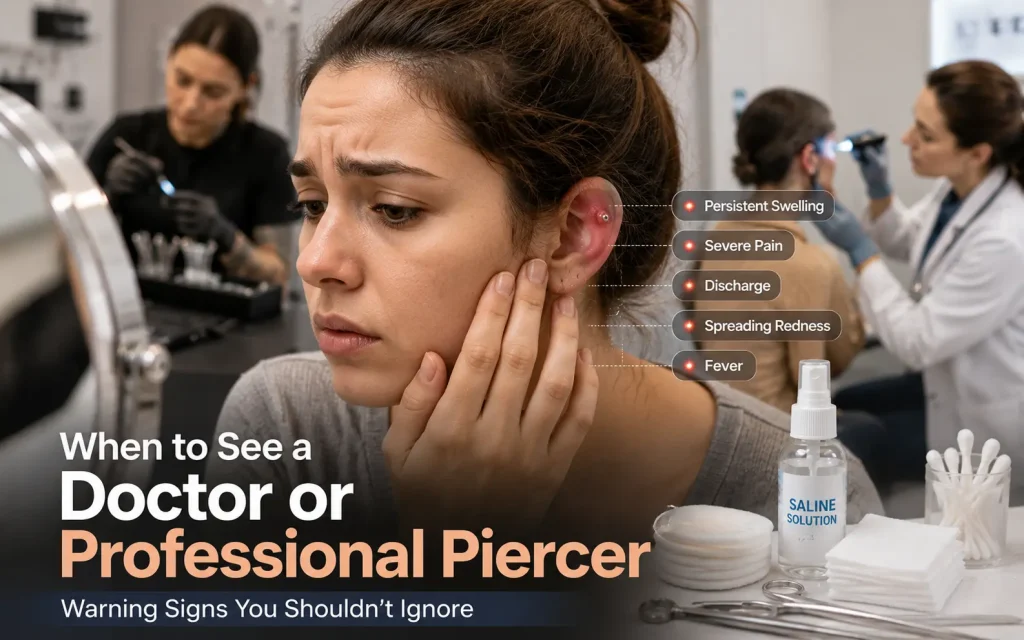
Most piercing bumps improve with proper care, but some situations require professional attention. If a bump continues growing, becomes increasingly painful, or shows signs of infection, do not delay seeking help.
Warning Signs of Infection
Seek medical advice if you experience:
- Fever or chills
- Severe swelling
- Thick yellow or green discharge
- Persistent bleeding
- Intense pain
- Rapidly expanding redness
These symptoms may indicate a more serious infection that requires medical treatment. Experts also recommend consulting a dermatologist if you suspect a keloid is developing.
How to Prevent Piercing Bumps
Preventing a piercing bump is often easier than treating one. A few simple habits can dramatically reduce your risk.
Choosing the Right Jewelry
High-quality jewelry plays a major role in successful healing. Implant-grade titanium is widely regarded as one of the safest materials because it minimizes allergic reactions and irritation. Proper sizing is equally important since jewelry that is too tight or too loose can create friction.
Investing in quality jewelry from the beginning often prevents complications later. It may cost more upfront, but it can save you weeks or months of frustration.
Following Proper Aftercare
Proper aftercare is the foundation of healthy piercing healing. Clean the piercing regularly with sterile saline, avoid unnecessary touching, and follow your piercer’s instructions carefully. Consistency matters more than complicated treatment routines.
Many community discussions among experienced piercers emphasize that irritation bumps often improve when the source of irritation is identified and removed. Common triggers include sleeping on the piercing, using facial products near the site, and frequent jewelry movement.
Patience is also essential. Healing times vary depending on the piercing location, your immune system, and your aftercare routine. Giving your body time to heal naturally often produces the best results.
FAQs
How long does it take for a piercing bump to go away?
Most irritation bumps improve within a few weeks to a few months, depending on the cause and how well the piercing is cared for.
Can I pop a piercing bump?
No. Popping a piercing bump can introduce bacteria, increase inflammation, and lead to scarring or infection.
Is sea salt solution good for piercing bumps?
Yes. Sterile saline or properly prepared saline solutions are commonly recommended to clean piercings and reduce irritation.
Should I remove my jewelry if I have a piercing bump?
Not usually. Removing jewelry prematurely can trap infection or disrupt healing. Consult a professional piercer or doctor before removing it.
When should I worry about a piercing bump?
You should seek professional advice if the bump is growing rapidly, producing pus, causing severe pain, or accompanied by fever and significant swelling.
Conclusion
A piercing bump can be frustrating, but it is usually manageable with the right approach. The key is understanding the underlying cause, whether it is irritation, an allergic reaction, infection, or scar tissue formation. Proper cleaning, sterile saline soaks, high-quality jewelry, and minimizing trauma can significantly improve healing and reduce bumps over time.
Most importantly, resist the urge to experiment with aggressive home remedies. Gentle, consistent aftercare is often far more effective than quick fixes. If the bump becomes painful, continues growing, or shows signs of infection, seek guidance from a healthcare professional or experienced piercer. With patience and proper care, most piercing bumps eventually improve and allow you to enjoy your piercing without complications.
You May Also Like It: