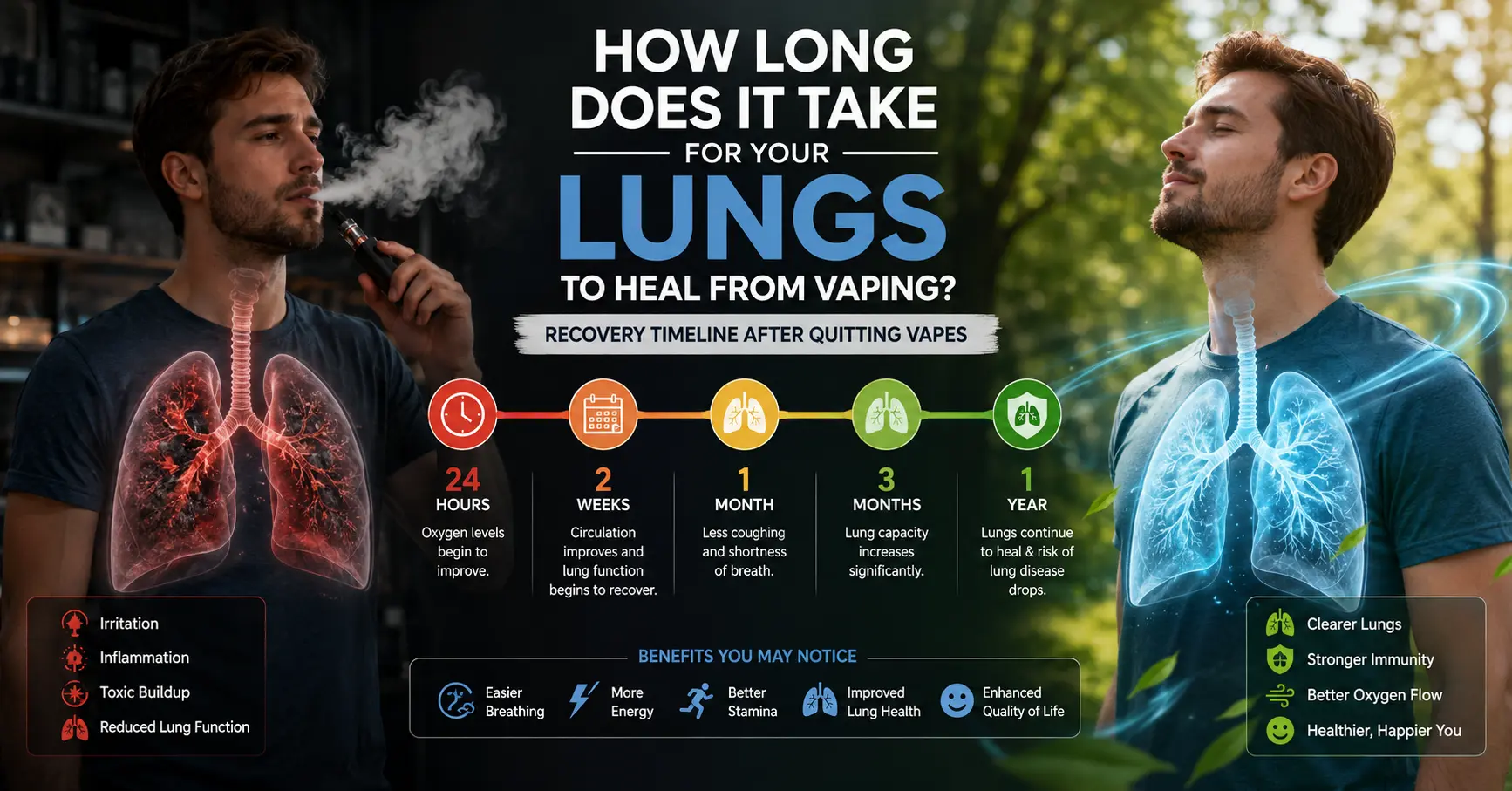

How Long Does It Take for Your Lungs to Heal From Vaping is a common question among people who have recently quit vaping or are considering stopping for the sake of their health. While vaping is often marketed as a less harmful alternative to smoking, it can still expose the lungs to chemicals and irritants that may affect respiratory function over time. The good news is that the body has a remarkable ability to repair itself once vaping stops.
The timeline for lung healing varies from person to person and depends on factors such as how long you vaped, how frequently you used e-cigarettes, your overall health, and whether you have any existing lung conditions. Some improvements, such as reduced inflammation and easier breathing, may begin within weeks, while more significant recovery can take months or even years.
In this guide, we’ll explore how long it takes for your lungs to heal from vaping, the stages of recovery you can expect, signs that your lungs are improving, and practical steps you can take to support the healing process.
Can Your Lungs Heal After Vaping?
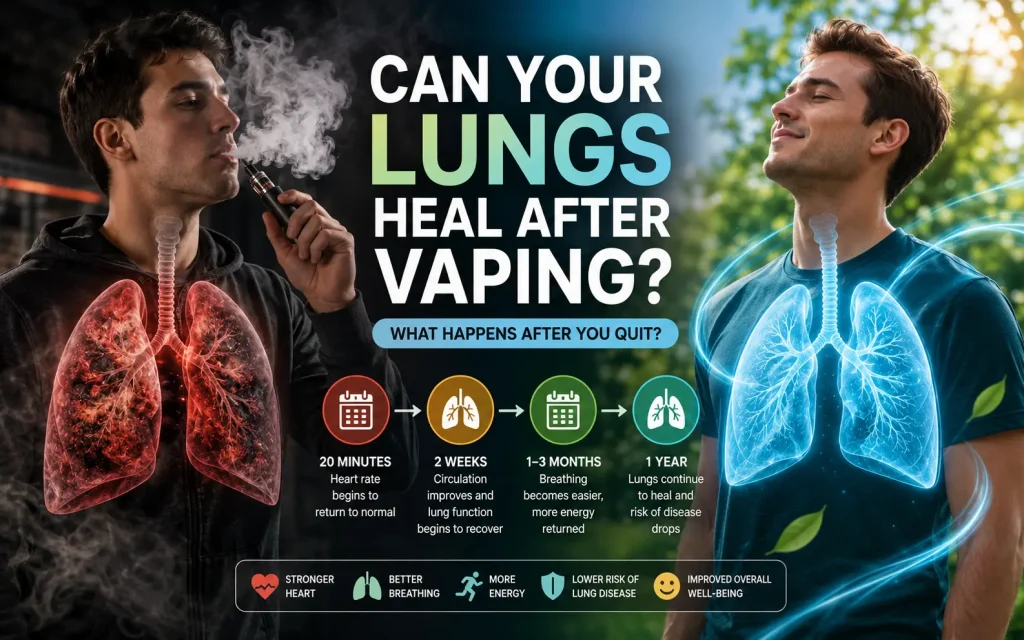
Yes, the lungs have an amazing ability to repair themselves. Tiny hair-like structures called cilia help remove mucus and toxins from the airways. After quitting vaping, these structures gradually recover, making it easier to breathe and reducing inflammation.
However, recovery depends on factors such as:
- How long you have been vaping
- How frequently you vape
- Nicotine strength used
- Previous smoking history
- Age and overall health
- Existing lung conditions like asthma or COPD
People who stop earlier generally experience better healing than those who continue vaping for many years.
Timeline: How Long Does It Take for Your Lungs to Heal From Vaping?
After 20 Minutes
- Heart rate begins returning to normal.
- Blood pressure starts improving.
Although lung healing is not noticeable yet, your body has already started recovering.
After 24 Hours
- Nicotine levels begin dropping.
- Carbon monoxide exposure decreases.
- Oxygen levels improve.
You may experience withdrawal symptoms such as:
- Irritability
- Anxiety
- Difficulty concentrating
- Cravings
After 48 to 72 Hours
Most nicotine has left the body.
You may notice:
- Better sense of taste
- Improved smell
- Increased energy
However, cravings and mood changes may peak during this period.
After 2 to 12 Weeks
This is when lung function begins improving.
Many people experience:
- Easier breathing
- Better circulation
- More stamina during exercise
- Less wheezing
You may actually cough more during this stage. This is normal because the lungs are clearing mucus and debris.
After 1 to 9 Months
The cilia inside the lungs continue healing.
Common improvements include:
- Reduced coughing
- Less shortness of breath
- Fewer chest infections
- Better sleep quality
- Increased physical endurance
After 1 Year
Your risk of heart disease becomes significantly lower.
You may notice:
- Stronger lung capacity
- Improved cardiovascular health
- Better oxygen delivery throughout the body
After Several Years
Long-term benefits include reduced risk of:
- Lung disease
- Stroke
- Heart attack
- Chronic bronchitis
- Certain cancers
Although scientists are still studying vaping’s long-term effects, quitting early greatly lowers future health risks.
What Chemicals in Vapes Damage the Lungs?
Many people think flavored vape products are harmless, but they contain harmful substances.
Nicotine
- Highly addictive
- Raises blood pressure
- Damages blood vessels
Formaldehyde
- Toxic chemical
- Associated with cancer and lung disease
Acrolein
- Found in weed killers
- Causes lung irritation
Diacetyl
- Linked to “popcorn lung”
- Damages small airways
Heavy Metals
Some devices expose users to:
- Nickel
- Tin
- Lead
These substances can trigger inflammation and oxidative stress.
Symptoms That Improve After Quitting Vaping
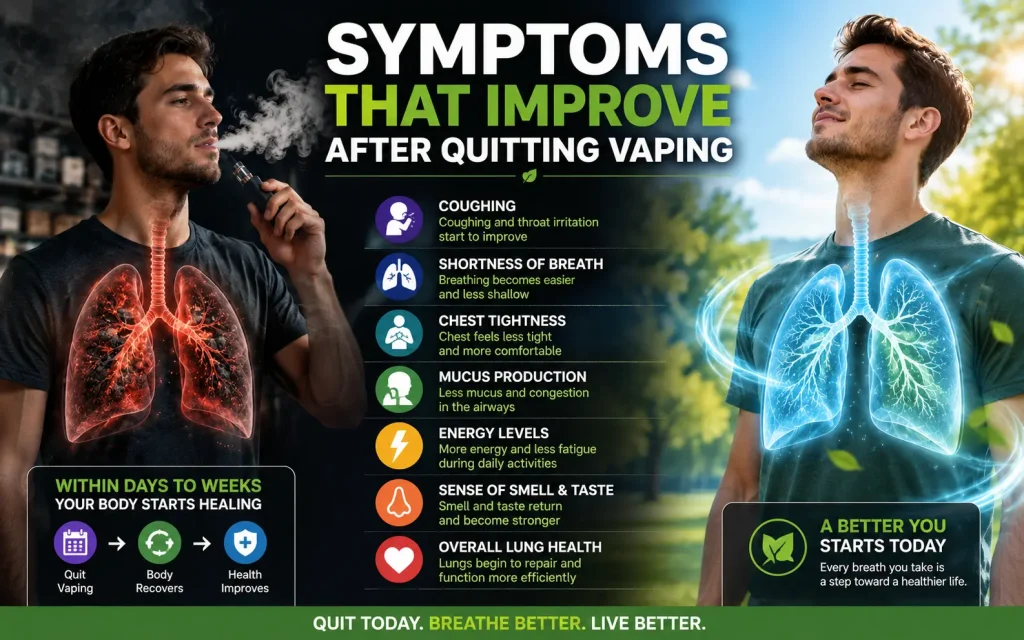
As your lungs recover, you may notice:
- Less coughing
- Reduced mucus production
- Easier breathing
- More energy
- Better sleep
- Improved sense of taste and smell
- Better exercise performance
- Fewer respiratory infections
Why Do I Cough More After Quitting Vaping?
Many people worry when coughing increases after they quit.
This is actually a positive sign.
The tiny cilia inside your airways begin functioning again and start removing:
- Mucus
- Toxins
- Dust particles
- Irrants trapped in the lungs
This temporary “cleaning process” usually improves within several weeks.
Can Lung Damage From Vaping Be Permanent?
Sometimes.
Mild inflammation often improves after quitting, but severe conditions may cause lasting damage.
Possible complications include:
Popcorn Lung
Scarring of the small airways that causes:
- Chronic cough
- Wheezing
- Shortness of breath
Collapsed Lung
A rare but serious condition that causes:
- Sudden chest pain
- Difficulty breathing
Chronic Bronchitis
Persistent inflammation leading to:
- Mucus production
- Ongoing cough
COPD
- Long-term airway damage that makes breathing difficult.
- Early cessation greatly reduces the risk of permanent injury.
How to Help Your Lungs Heal Faster
There is no miracle cure, but healthy habits can support recovery.
Stay Hydrated
Water helps thin mucus and keeps airways moist.
Exercise Regularly
Walking, cycling, and swimming improve lung capacity and circulation.
Aim for:
- 30 minutes most days
- Moderate-intensity activities
Eat Anti-Inflammatory Foods
Foods that support lung health include:
Fruits
- Oranges
- Berries
- Apples
Vegetables
- Broccoli
- Spinach
- Carrots
Healthy Fats
- Salmon
- Walnuts
- Olive oil
Protein Sources
- Eggs
- Chicken
- Beans
Avoid Smoke and Pollution
Secondhand smoke and polluted air can slow healing.
Consider:
- Air purifiers
- Wearing masks in polluted environments
- Avoiding smoking areas
Practice Deep Breathing
Breathing exercises can strengthen the lungs.
Try:
- Diaphragmatic breathing
- Pursed-lip breathing
- Meditation and yoga
Get Enough Sleep
Sleep allows the body to repair tissues and reduce inflammation.
Aim for:
7–9 hours each night
When Should You See a Doctor?
Seek medical attention if you experience:
- Persistent chest pain
- Wheezing that worsens
- Shortness of breath
- Coughing up blood
- Fever
- Recurring lung infections
- Severe fatigue
These symptoms may indicate a more serious condition requiring evaluation.
Frequently Asked Questions
How long does it take for your lungs to heal from vaping completely?
Most people notice improvements within 2–12 weeks. Full recovery varies and may take months or years. Severe damage may not be completely reversible.
Can lungs heal after years of vaping?
Yes. The lungs can repair some damage even after years of vaping, although the amount of recovery depends on the severity and duration of use.
What happens after 30 days of not vaping?
After one month, breathing often becomes easier, circulation improves, and coughing or wheezing may start decreasing.
Can exercise help repair lungs after vaping?
Exercise cannot reverse damage directly, but it improves lung function, circulation, and overall respiratory health.
Is vaping safer than smoking?
Vaping exposes users to fewer chemicals than traditional cigarettes, but it is not harmless. Research shows it can still damage the lungs and cardiovascular system.
Why am I coughing after quitting vaping?
Increased coughing is usually temporary and happens because the lungs are clearing mucus and toxins as the airways recover.
Final Thoughts
If you’re asking how long does it take for your lungs to heal from vaping, the encouraging news is that recovery begins almost immediately after you quit. Within weeks, your breathing, circulation, and energy levels may improve. Over months and years, your body continues repairing itself and lowering the risk of serious diseases.
Although some severe damage can be permanent, quitting vaping at any stage provides meaningful health benefits. The earlier you stop, the greater your lungs’ ability to recover. Pairing smoking cessation with regular exercise, proper hydration, nutritious foods, and good sleep can further support the healing process and help you regain better respiratory health for the future.
You May Also Like It: