

Home Upgrading Advice Mintpalment most homeowners start a renovation with excitement and end it with regret. Not because the work was bad but because nobody gave them a clear plan before the first hammer swing.This guide changes that.
You will get a full roadmap covering budget planning room-by-room upgrade priorities hidden costs competitors never mention DIY versus professional decisions and a realistic timeline you can follow without losing your mind or your savings.
This is not about dream renovations. This is about making real improvements to the home you actually live in.
What Home Upgrading Advice Mintpalment Actually Means

Before you spend a single dollar you need to understand what smart home upgrading looks like in practice.
- It means three things working together at the same time.
- First you improve your daily comfort. Second you protect or increase your property value.
- Third you do both without creating financial damage that takes years to recover from.
- Most renovation content treats these as separate goals. They are not.
- The best upgrades serve all three purposes at once.
Competitors focus heavily on budgeting and financing. That matters but it is only one piece of a larger picture. This guide gives you everything including what rooms to upgrade first how to sequence your projects and how to avoid the expensive mistakes most homeowners only learn about after it is too late.
The Upgrade Hierarchy: What to Fix Before Anything Else
This is the section most renovation guides skip entirely and it costs homeowners thousands of dollars in wasted money.
- You cannot upgrade your kitchen if your roof is leaking.
- You cannot update your bathroom if your plumbing is failing.
- The order of renovation matters more than the renovation itself.
- Follow this sequence before you consider anything cosmetic.
Structural Integrity First
Check your foundation for cracks or settling. Inspect your roof for missing shingles water damage or sagging. Look at load-bearing walls before planning any layout changes. These are not exciting upgrades but skipping them turns every future improvement into a financial risk.
Building Systems Second
Your electrical panel your plumbing lines and your HVAC system determine whether your home operates safely. If your panel is outdated it may not handle modern appliances. If your pipes are corroded they will fail at the worst possible time. Address these before touching anything visible.
Energy Performance Third
Air sealing insulation and window upgrades reduce monthly costs and increase comfort. These are investments that pay you back every single month through lower utility bills.
Layout and Functionality Fourth
Once your systems are solid look at how your home actually works for you. Kitchen workflow bathroom ventilation storage space and room flow all affect daily life more than paint colors or cabinet styles.
Aesthetics Last
Flooring finishes lighting fixtures paint and decor come at the end of the process. When you do them after fixing everything else they look great and stay that way.
Building a Renovation Budget That Actually Works
Your budget is not a wish list. It is a plan with real numbers attached to real decisions.
Start With Your Total Number
Before you break things down by room decide how much you can spend without financial stress. Not how much you want to spend. How much you can spend.
Apply the Contingency Rule
Add 15 to 20 percent on top of every estimate you receive. In older homes this buffer gets used almost every time. Pipes behind walls electrical surprises and code requirements that were not obvious at the start all cost money. Without a buffer you either stop the project halfway or compromise quality to finish it.
Break Costs Into Three Buckets
The first bucket is non-negotiable structural and system work. The second bucket is high-ROI upgrades like kitchens and bathrooms that add measurable value. The third bucket is personal preference upgrades that improve your enjoyment but may not add resale value.
Fund bucket one first always. Fund bucket two next. Fund bucket three only with what remains.
Get Detailed Quotes Not Estimates
An estimate is a guess. A quote with line items for materials labor permits and timeline is a commitment you can hold someone to. Always get at least three quotes before choosing a contractor. Compare the line items not just the total number.
Watch for Red Flags in Contractor Quotes
Vague pricing with no material specifications is a warning sign. Contractors who pressure you to sign quickly are a warning sign. Prices that come in 30 percent below every other quote are the biggest warning sign of all. There is always a reason when a price seems too good.
Room-by-Room Upgrade Guide With Realistic Costs
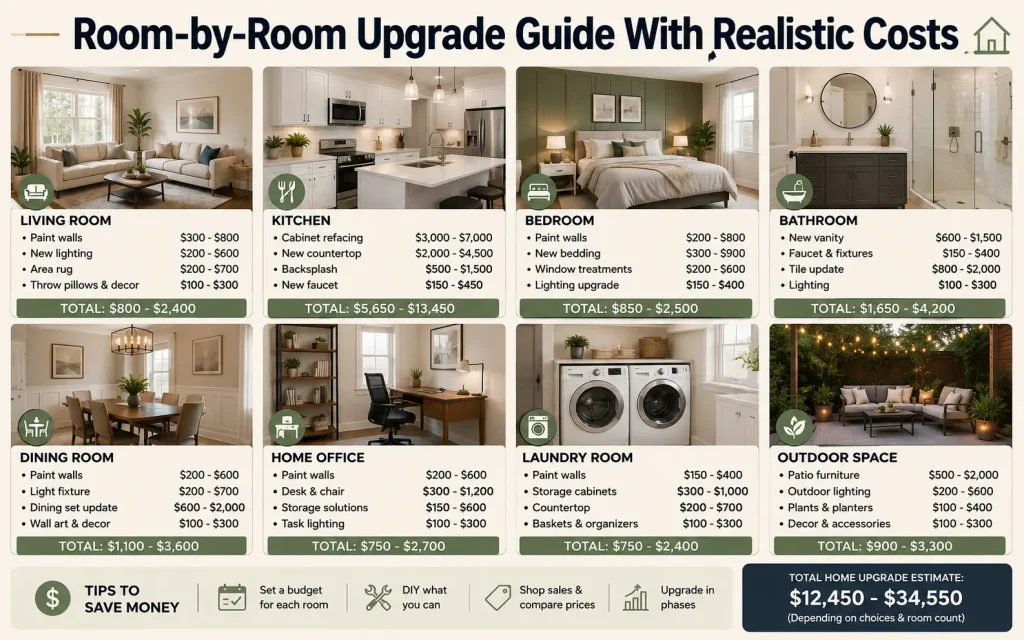
This section does not appear in either competitor article. It gives you specific guidance by room so you know exactly where your money goes.
Kitchen: The Highest-Value Room in Your Home
You do not need to demolish and rebuild your kitchen to get significant value from it. Minor kitchen remodels consistently return around 80 percent of their cost according to industry cost versus value data. Major remodels return significantly less.
What actually works
Replacing cabinet fronts and hardware instead of full cabinets saves 60 to 70 percent of the cost while producing a nearly identical visual result. Updating countertops to quartz or butcher block adds value without a full renovation. Replacing outdated appliances with energy-efficient models improves daily function and lowers utility costs. Improving lighting especially under-cabinet lighting makes the entire kitchen feel newer and more usable.
Bathroom: Where Small Changes Make Big Impact
Replace caulking and regrouting before anything cosmetic. Mold and moisture damage are health issues not just visual problems. Update fixtures to water-efficient models. This reduces monthly costs and appeals to buyers. Improve ventilation with a quality exhaust fan. This alone extends the life of everything else in the room. Replace the vanity and mirror for an immediate visual refresh at a fraction of full renovation cost.
Living Areas: Focus on Light and Flow
Living rooms and dining areas respond well to lighting upgrades. Replacing outdated overhead fixtures with warm LED alternatives changes the entire atmosphere of a room at minimal cost. Adding a dimmer switch costs about twenty dollars and creates flexibility you will use every day.
Bedrooms: Comfort Over Cosmetics
Bedrooms rarely add significant resale value from cosmetic upgrades alone. Focus instead on closet organization which buyers notice and remember. Adding built-in storage or a custom closet system returns its cost in buyer appeal. Blackout window treatments improve sleep quality which improves your daily life in a way no countertop can match.
Basement and Attic: Hidden Opportunity
These spaces represent the highest potential ROI for functional square footage. Finishing a basement adds usable living space that buyers value. Insulating an attic delivers immediate monthly savings on heating and cooling costs. Neither requires luxury finishes to generate real value.
The DIY Line: Where to Save and Where to Stop
One of the most practical questions in any renovation is what you can do yourself without creating problems you will pay double to fix later.
Safe for DIY
- Demolition is the number one money saver. Tearing out old drywall ripping up carpet and removing old fixtures saves five hundred to fifteen hundred dollars in labor depending on room size. Wear proper protection and rent a dumpster.
- Painting saves significant money and produces professional results with proper preparation. The preparation takes more time than the painting itself. Do not skip it.
- Landscaping work including spreading mulch planting shrubs and maintaining lawns is accessible to most homeowners and produces strong curb appeal returns.
- Installing light fixtures and ceiling fans is manageable if you follow safety protocols and turn off the circuit breaker before touching anything electrical.
- Flooring installation specifically floating floor systems like laminate or vinyl plank is designed for DIY. With proper preparation and patience the results look professional.
Leave This to Professionals
- Electrical panel work and new circuit installation require permits and licensed electricians in most jurisdictions. Getting this wrong creates fire hazards and fails inspections.
- Plumbing changes beyond basic fixture replacement including pipe rerouting and water heater installation require professional work. Improper plumbing causes water damage that costs far more to repair than the original job would have cost.
- Structural changes including removing walls and altering load-bearing elements always require professional assessment and permits. Guessing about load-bearing walls has collapsed ceilings.
- HVAC installation and major repairs require licensed technicians. Modern systems also require calibration that DIY installation will miss.
Timing Your Renovation to Save Real Money
- This is another area competitors do not address directly. When you schedule your renovation matters nearly as much as what you renovate.
- Contractors slow down between November and February in most markets. Scheduling work during this window allows you to negotiate ten to twenty percent off labor costs simply because contractors would rather keep their crews busy than sit idle.
- Material costs fluctuate with supply chains. Lumber prices for example can vary dramatically across seasons and years. Buying materials when prices dip and storing them until your project begins is a strategy experienced renovators use regularly.
- End-of-season sales on appliances happen when new models arrive in stores. Floor models with cosmetic imperfections sell at twenty to thirty percent below retail and function identically to new units.
Energy Efficiency Upgrades Nobody Talks About Enough
Both competitor articles mention energy efficiency briefly. This section goes deeper because it is where long-term financial returns are most reliable.
Air Sealing Before Insulation
Most homeowners add insulation without sealing air gaps first. Insulation slows heat transfer. Air sealing stops it. Sealing gaps around outlets windows doors and attic hatches produces more impact per dollar than additional insulation alone.
Smart Thermostats Are Not Just Convenient
A programmable thermostat saves an average of ten to fifteen percent on annual heating and cooling costs. Over five years that adds up to several hundred to over a thousand dollars depending on your climate and home size.
Water Heater Efficiency
Switching from a traditional tank water heater to a heat pump water heater reduces water heating costs by up to sixty percent. These units cost more upfront but pay back the difference through savings within three to five years in most cases.
Window Film Before Window Replacement
If your budget cannot stretch to full window replacement high-quality window film reduces solar heat gain by up to eighty percent and costs a fraction of new windows. This is a transitional solution that genuinely works while you save for the bigger upgrade.
The Five-Year Upgrade Roadmap
Neither competitor offers a specific timeline framework. This is the planning tool that turns renovation intentions into completed projects.
- Year One: Complete a professional assessment of structural and system conditions. Address any urgent safety issues. Complete air sealing and insulation improvements.
- Year Two: Upgrade HVAC if needed. Address plumbing or electrical system concerns. Begin building the budget for kitchen or bathroom work.
- Year Three: Execute the highest-ROI renovation in your home whether kitchen bathroom or finished basement depending on your specific situation and market.
- Year Four: Focus on exterior improvements including roof maintenance siding and landscaping. Curb appeal affects perceived value even before buyers walk inside.
- Year Five: Complete aesthetic refinements throughout the home. Fresh paint updated lighting and flooring refresh make the cumulative improvements from prior years shine.
This staged approach keeps cash flow manageable and prevents the project fatigue that causes most renovations to stall halfway through.
Upgrades That Look Good but Waste Money

Most renovation content tells you what to do. This section tells you what not to do.
Swimming Pools
In most markets a swimming pool returns only about forty percent of its installation cost at resale. Maintenance adds ongoing annual costs. Unless you live in a climate where pools are expected by buyers this is a personal luxury not a financial investment.
Over-Improving for Your Neighborhood
Installing luxury finishes in a neighborhood where homes sell at mid-range prices returns a fraction of the cost. Buyers compare your home to others in your area. Research local sale prices before committing to high-end materials that the market will not recognize.
Highly Personalized Renovations
Bold feature walls unique tile designs and custom-built specialty rooms appeal to your taste and may not appeal to buyers. Keep structural and permanent changes neutral. Express personal taste through furniture and decor you can take with you when you move.
Sunrooms and Conservatories Without Planning Permission
Additions built without proper permits create legal problems at resale. Buyers cannot get standard financing on homes with unpermitted additions in many jurisdictions. Always pull permits. The cost is minimal compared to the alternative.
Contractor Management: How to Run Your Renovation Without Losing Control
Hiring the right contractor is one decision. Managing the relationship throughout the project is another skill entirely.
- Always get a written contract before any work begins. The contract should specify materials by brand and model number labor costs a payment schedule tied to completed milestones and a project completion date with penalty clauses for significant delays.
- Never pay more than ten to fifteen percent upfront. Staged payments tied to completed work protect you if the project stalls or the contractor disappears. This happens more often than most people realize.
- Visit the job site daily during active work phases. You do not need to hover but regular presence communicates that you are paying attention. Issues get addressed faster when the homeowner is visible and engaged.
- Document everything with photos before walls close. Photograph the location of every wire and pipe before drywall goes up. If something needs repair years later this documentation saves significant time and money.
Maintenance: The Upgrade Nobody Counts as an Upgrade
Deferred maintenance destroys the value of every cosmetic improvement you make. A freshly painted room with a water stain forming on the ceiling communicates neglect not improvement.
Annual inspections of roofing plumbing HVAC and exterior caulking prevent small issues from becoming expensive emergencies. Financial advisors consistently recommend allocating one to three percent of your home value annually to maintenance. A three hundred thousand dollar home warrants three thousand to nine thousand dollars per year in maintenance spending.
This is not glamorous. It is what separates homes that hold value from homes that deteriorate while looking fine on the surface.
Common Renovation Mistakes and How to Avoid Them
- Mistake one: Starting with cosmetics before addressing systems. Every experienced contractor has seen beautiful kitchens installed above failing plumbing. Fix what is hidden first.
- Mistake two: Choosing a contractor based on price alone. The lowest quote is rarely the best value. A contractor who misses details or cuts material quality will cost you more in corrections than the savings on the original bid.
- Mistake three: Skipping permits to save time and money. Unpermitted work creates problems at sale and can result in mandatory removal of completed work. The permit process exists to protect you.
- Mistake four: Renovating without a clear priority order. Starting everything at once and finishing nothing creates a home that functions worse than before work began. One room at a time with clear completion criteria produces better results.
- Mistake five: Ignoring resale considerations entirely. Even if you plan to stay in your home for twenty years circumstances change. Renovations that improve your life and hold resale value serve you better than renovations that serve only your current preferences.
FAQs
How can I upgrade my home on a budget?
Create a plan, prioritize essential improvements, tackle DIY projects when possible, and focus on upgrades that offer both functionality and visual appeal.
What are the most affordable home upgrades?
Affordable upgrades include painting walls, updating light fixtures, replacing cabinet hardware, installing smart devices, and improving storage solutions.
Which home upgrades add the most value?
Kitchen improvements, bathroom renovations, energy-efficient windows, new flooring, and enhanced curb appeal typically provide the highest return on investment.
What is Home Upgrading Advice Mintpalment?
Home Upgrading Advice Mintpalment refers to practical tips and strategies that help homeowners improve their living spaces through smart renovations and upgrades.
What are the most affordable home upgrades?
The choice depends on your needs and budget, but kitchens often provide a higher return on investment and can significantly improve daily living.
Final Thoughts
Smart home upgrading is not about spending the most money or following the latest design trends. It is about making deliberate decisions in the right order with a realistic plan behind every action.
The framework in this guide works because it treats your home as both a living space and a long-term asset at the same time. Fix structure before systems. Fix systems before aesthetics. Spend where returns are real. Maintain what you improve.
That sequence has produced successful renovations for homeowners across every budget level. It will work for yours too.Start with a clear audit of what your home actually needs. Work through the hierarchy. Build your timeline. Then execute one room at a time with the patience to do it right.
It May Also Like It:
How to Reset Honeywell Thermostat
How to Write Address on Envelope
