

How to Remove Nail Glue from Skin You were applying your press-on nails and then it happened. Nail glue got on your skin. You are not alone. It happens to beginners and experienced nail lovers alike. The good news is that removing nail glue from skin is easier than you think once you know the right approach.
This guide covers every proven method, what your competitors never tell you about skin type differences, safety warnings, and how to prevent it from happening again.
What Is Nail Glue and Why Does It Bond to Skin So Strongly
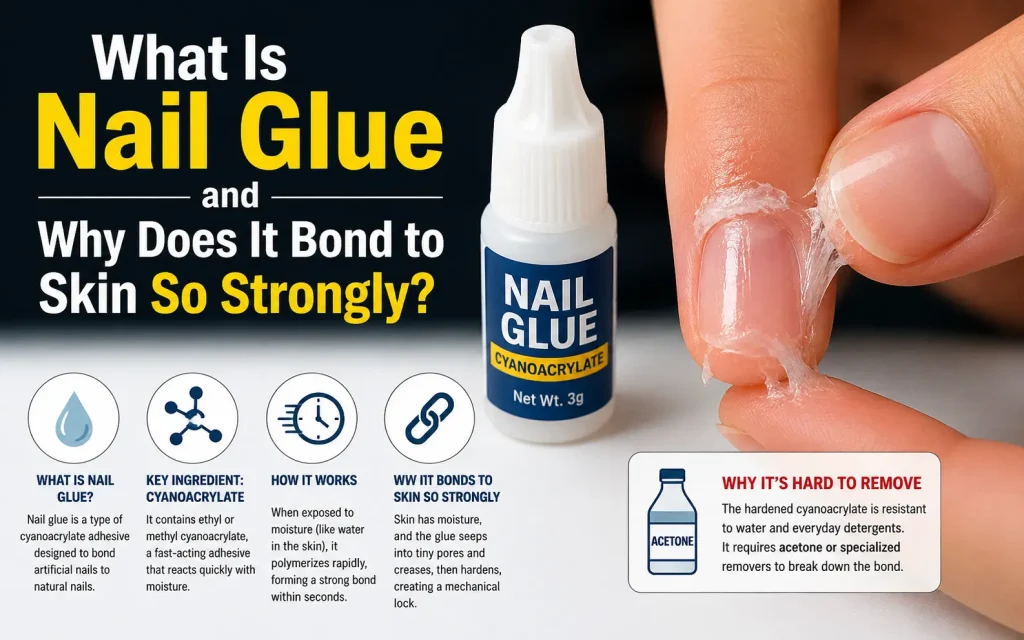
Nail glue is made primarily from cyanoacrylate, the same active compound found in super glue. Cyanoacrylate reacts instantly with the moisture present on your skin and forms tight cross-linked polymer chains. The wetter your skin, the faster and stronger the bond.
This explains why nail glue grips skin more aggressively than it grips nail surfaces in dry conditions. Your skin is always slightly moist, which triggers an almost immediate chemical reaction.
Understanding this chemistry helps you choose the right removal method because the goal is to break or weaken those polymer chains without damaging your skin barrier.
Is Nail Glue on Skin Dangerous
For most people nail glue on skin causes only minor irritation. However there are situations where it becomes a medical concern.
- If you bond two fingers together or glue your finger to your nail accidentally, forcing them apart can tear the skin
- Prolonged contact without removal can cause a chemical burn in rare cases as noted in research published by the National Center for Biotechnology Information
- People with sensitive skin, eczema, or psoriasis may experience stronger irritation or allergic reaction
- Children have thinner and more sensitive skin and require gentler removal methods only
If the glue gets near your eyes, mouth, or lips treat it as a medical emergency and seek professional help immediately.
Quick Action Guide for Fresh vs Dried Glue
The first two minutes after nail glue touches your skin matter the most.
| Situation | Best First Action |
|---|---|
| Glue is still wet | Rinse with warm water and gently roll skin away |
| Glue dried within 5 minutes | Warm soapy water soak for 10 to 15 minutes |
| Fully dried and hardened | Acetone or oil-based method |
| Glue bonding two skin surfaces | Do not pull. Soak in warm soapy water first |
| Near eyes or mouth | Seek medical attention immediately |
Do not peel or scratch at dried glue under any circumstances. Forced peeling is the leading cause of skin tearing and scarring from nail glue accidents.
Method 1: Warm Soapy Water Soak
Best for: Fresh glue, mild cases, sensitive skin, children
This is the safest and most accessible method. It works by hydrating the glue and weakening the adhesive bond gradually.
- Step 1: Fill a bowl with warm but not hot water. Hot water can further irritate skin.
- Step 2: Add a few drops of mild dish soap or hand soap. Dish soaps with a degreasing formula work slightly better.
- Step 3: Submerge the affected area and soak for 10 to 15 minutes.
- Step 4: Use your fingertip to gently massage the glue in circular motions. You will feel it start to lift and roll.
- Step 5: If the glue does not come off after 15 minutes, soak for another 5 to 10 minutes rather than forcing it.
- Step 6: Pat dry and apply moisturizer.
What competitors miss: Adding a small amount of dish soap rather than hand soap makes a noticeable difference because dish soap is formulated to break down grease and adhesives. Also, water temperature matters. Warm water dilates pores and softens the skin surface, making glue removal easier and less painful.
Method 2: Acetone Nail Polish Remover
Best for: Fully dried and stubborn glue, fastest results
Acetone is the most effective chemical solvent for dissolving cyanoacrylate. It works by penetrating the polymer chains and breaking the molecular bonds that hold the glue together.
- Step 1: Soak a cotton ball or cotton pad in 100 percent acetone nail polish remover.
- Step 2: Press it firmly against the glue spot and hold it in place for 30 to 60 seconds. Do not rub immediately.
- Step 3: After the soak time, gently rub in small circular motions. The glue should dissolve and lift.
- Step 4: Use a soft toothbrush for any stubborn residue. Brush gently.
- Step 5: Wash the area thoroughly with soap and water immediately after removal.
- Step 6: Apply a rich moisturizer or hand cream right away. Acetone strips the skin of its natural oils.
Important warnings about acetone:
- Never use acetone near an open flame. It is highly flammable.
- Work in a ventilated room. The fumes are strong and can cause dizziness.
- Do not use acetone on open wounds or broken skin.
- Avoid prolonged exposure. Keep contact time under three minutes per session.
- If you have acrylic or gel nails on other fingers, be careful. Acetone will damage them.
What competitors miss: Most articles tell you to use acetone but none explain that 100 percent pure acetone works significantly faster than standard nail polish remover which often contains acetone in diluted form along with moisturizers that reduce its effectiveness. Pure acetone is available at beauty supply stores.
Method 3: Petroleum Jelly
Best for: Sensitive skin, people who want to avoid harsh chemicals, gradual removal
Petroleum jelly works by creating a lubricating barrier that slowly penetrates the glue and weakens its grip on the skin surface.
- Step 1: Apply a thick generous layer of petroleum jelly directly over the glue.
- Step 2: Massage it in using slow circular motions for 2 to 3 minutes.
- Step 3: Let it sit undisturbed for 10 to 15 minutes so it can work into the bond.
- Step 4: Use a soft cloth or your fingertip to gently roll and lift the glue away.
- Step 5: Wash the area with soap and water to remove residue.
- Step 6: The area is already moisturized but you can apply additional hand cream if desired.
Method 4: Cuticle Oil or Natural Oils
Best for: People who want a completely natural method, removing glue near cuticles
Oils break down the adhesive bond because cyanoacrylate does not polymerize well in oily environments. They are also excellent for the skin around the nails.
Oils that work well include olive oil, coconut oil, almond oil, and cuticle oil. Baby oil also works effectively.
- Step 1: Warm the oil slightly. Room temperature or slightly warm oil penetrates faster than cold oil.
- Step 2: Apply a generous amount directly to the glue and the surrounding skin.
- Step 3: Massage in slow firm circles for 5 minutes.
- Step 4: Let the oil sit for 15 to 20 minutes.
- Step 5: Use a soft cloth or cotton pad to gently roll and wipe the glue away.
- Step 6: Repeat once if the glue is thick or layered.
What competitors miss: Coconut oil contains lauric acid which has mild solvent properties in addition to its lubricating benefits. This makes it slightly more effective than olive oil for glue removal. However olive oil is better if you also have irritated or red skin because it contains natural anti-inflammatory compounds.
Method 5: Hand Lotion or Body Cream
Best for: Light glue residue, maintaining skin hydration during removal
Thick hand creams and body lotions can loosen minor glue deposits in the same way petroleum jelly does, just at a slower pace.
- Step 1: Apply a thick layer of hand cream or body lotion to the glue spot.
- Step 2: Massage firmly for 3 to 5 minutes.
- Step 3: Let it sit for 10 minutes.
- Step 4: Gently rub or roll the glue away with your fingertip.
- Step 5: Wash and reapply lotion for hydration.
This method is most effective on thin or fresh glue rather than thick dried deposits.
Method 6: Rubbing Alcohol
Best for: When you have no acetone but need something stronger than water
Rubbing alcohol with at least 70 percent isopropyl content can help soften nail glue. It is less effective than acetone but gentler on skin.
- Step 1: Soak a cotton ball in rubbing alcohol.
- Step 2: Hold it on the glue spot for 30 seconds.
- Step 3: Gently rub to lift the glue.
- Step 4: Repeat as needed. This may take several attempts.
b Moisturize after use as rubbing alcohol is also drying.
What competitors miss: No competitor article mentions rubbing alcohol as a standalone option. It is a genuinely useful middle-ground method for people with sensitive skin who find acetone too harsh but need something more powerful than oil or soap.
Method Comparison Table
| Method | Speed | Effectiveness | Skin Sensitivity | Chemical-Free |
|---|---|---|---|---|
| Warm Soapy Water | Slow (10 to 40 min) | Moderate | Best for sensitive skin | Yes |
| Acetone | Fast (1 to 5 min) | Highest | Avoid on sensitive skin | No |
| Petroleum Jelly | Moderate (15 to 20 min) | Good | Safe for all | Yes |
| Natural Oils | Moderate (15 to 25 min) | Good | Safe for all | Yes |
| Hand Lotion | Slow (15 to 30 min) | Light cases only | Safe for all | Yes |
| Rubbing Alcohol | Moderate (5 to 15 min) | Moderate | Use cautiously | No |
Removing Nail Glue from Specific Areas
Different areas of skin require different levels of care.
- Fingertips and palms: Use any method listed above. These areas have thicker skin and tolerate acetone well.
- Around cuticles: Use oil-based methods. Cuticle oil is the ideal choice here. Acetone around the cuticle line can cause peeling and dryness.
- The back of the hand: The skin here is thinner and more delicate. Use warm soapy water or oil methods first before trying acetone.
- Near nails: Acetone will also dissolve or damage gel, acrylic, or nail polish on nearby nails. Use a targeted cotton swab to apply it precisely.
- Lips: If glue touches your lips do not use acetone. Use warm water only and seek medical advice if the lips bond together.
- Eyes and eyelids: Seek medical attention immediately. Do not attempt home removal.
What You Should Never Do When Removing Nail Glue
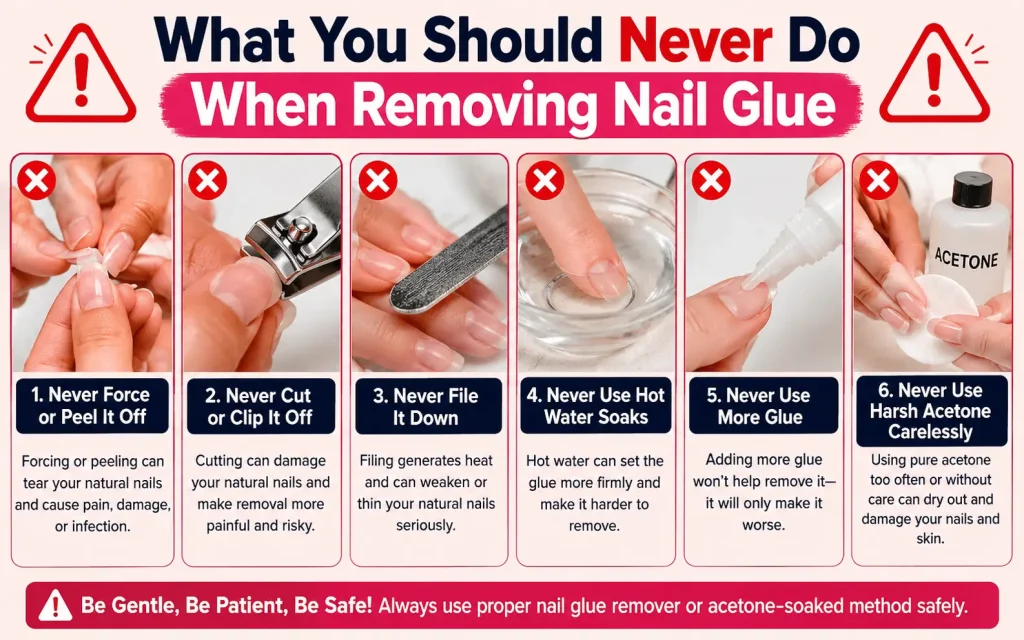
These mistakes cause the most skin damage and are rarely mentioned clearly in other articles.
- Never peel or pull forcefully: Cyanoacrylate bonds to the top layer of skin cells. Forcing it off can remove skin with it causing bleeding and scarring.
- Never use sharp objects: No scissors, razor blades, nail files, or knives near bonded skin. Accidents happen easily and cuts around nail glue can introduce infection.
- Never leave acetone on the skin for more than three minutes: Extended acetone exposure causes chemical dryness and in extreme cases surface burns.
- Never try to burn the glue off: This should be obvious but it is worth stating. Heat causes more chemical damage and serious burns.
- Never use nail glue near open cuts or irritated skin: The chemical reaction is much more intense on damaged skin and can cause a stronger burn.
Aftercare: What to Do Once the Glue Is Off
Proper aftercare protects your skin barrier and speeds up recovery.
- Step 1: Rinse with lukewarm water for at least 30 seconds to remove all traces of solvent or oil.
- Step 2: Wash gently with a mild fragrance-free soap.
- Step 3: Pat dry with a clean soft towel. Do not rub.
- Step 4: Apply a rich moisturizer or hand cream while the skin is still slightly damp. This locks in hydration.
- Step 5: If redness or irritation persists apply a thin layer of aloe vera gel or a gentle healing ointment.
- Step 6: Continue moisturizing the area for 2 to 3 days especially if you used acetone.
If the skin remains red, blistered, or painful after 24 hours consult a pharmacist or dermatologist.
How to Prevent Nail Glue from Getting on Your Skin
Prevention is far easier than removal. These professional-level tips are rarely covered in competitor articles. Apply petroleum jelly to the skin around your nails before you start. This creates a barrier that prevents glue from bonding to the skin even if it touches it.
Use a precision tip applicator if your nail glue bottle has one. These allow you to apply just the right amount directly to the nail surface. Use less glue than you think you need. A small thin layer is all you need for a strong bond. Excess glue is what causes spillover.
Keep a small bowl of warm water and a damp cloth nearby during application. If you notice glue on skin before it dries, wiping it away with the damp cloth in the first 10 to 15 seconds is the easiest removal of all.
Work slowly in good lighting. Most glue accidents happen when people rush or work in dim conditions. Practice with one nail before doing .
FAQs
How do you remove nail glue from skin quickly?
You can remove nail glue from skin by soaking the affected area in warm, soapy water and gently rubbing it. For stubborn glue, use an acetone-based nail polish remover.
Is acetone safe for removing nail glue from skin?
Yes, acetone is commonly used to remove nail glue from skin. However, it can dry out the skin, so wash and moisturize the area afterward.
How long does it take to remove nail glue from skin?
The time varies depending on the amount of glue. Small amounts may come off in a few minutes, while thicker glue may require soaking and repeated treatment.
What should I do if my fingers are stuck together with nail glue?
Soak your fingers in warm, soapy water and gently work them apart. Do not force them apart, as this can damage the skin.
Can I remove nail glue from skin without acetone?
Yes, you can try warm soapy water, olive oil, coconut oil, petroleum jelly, or lemon juice to help loosen the glue naturally.
Final Thought
Removing nail glue from skin may seem difficult at first, but with the right approach, it can be done safely and effectively. Whether you use warm soapy water, acetone-based nail polish remover, or natural oils, patience is the key to avoiding skin irritation or damage never pull or peel off glued skin forcefully, as this can cause pain and injury.
By following the proper steps and taking care of your skin afterward with a good moisturizer, you can remove nail glue comfortably and keep your skin healthy. The next time you accidentally get nail glue on your skin, these simple techniques will help you solve the problem quickly and safely.
It May Also Like It:
How to Reset Honeywell Thermostat
How to Write Address on Envelope
