
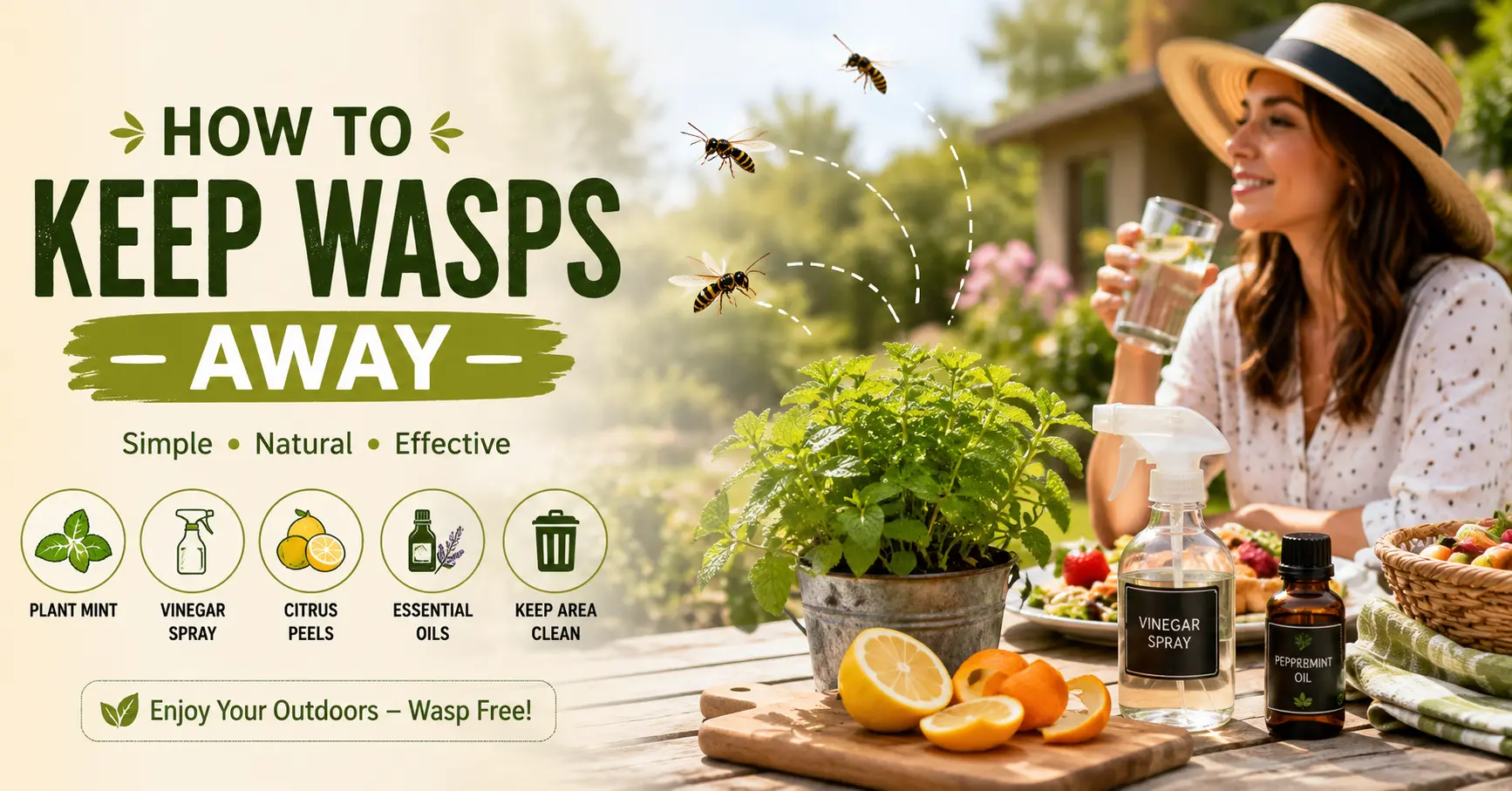
How to keep wasps away can quickly turn a peaceful afternoon outdoors into a stressful experience. Their painful stings aggressive behavior and tendency to build nests close to homes make them one of the most unwanted pests. While wasps play an important role in nature by controlling other insects and helping with pollination they can become dangerous when they establish colonies near people.
Learning what attracts wasps how to event nesting and how to remove them safely can help you enjoy your outdoor spaces without fear of stings.
Why Wasps Become a Problem
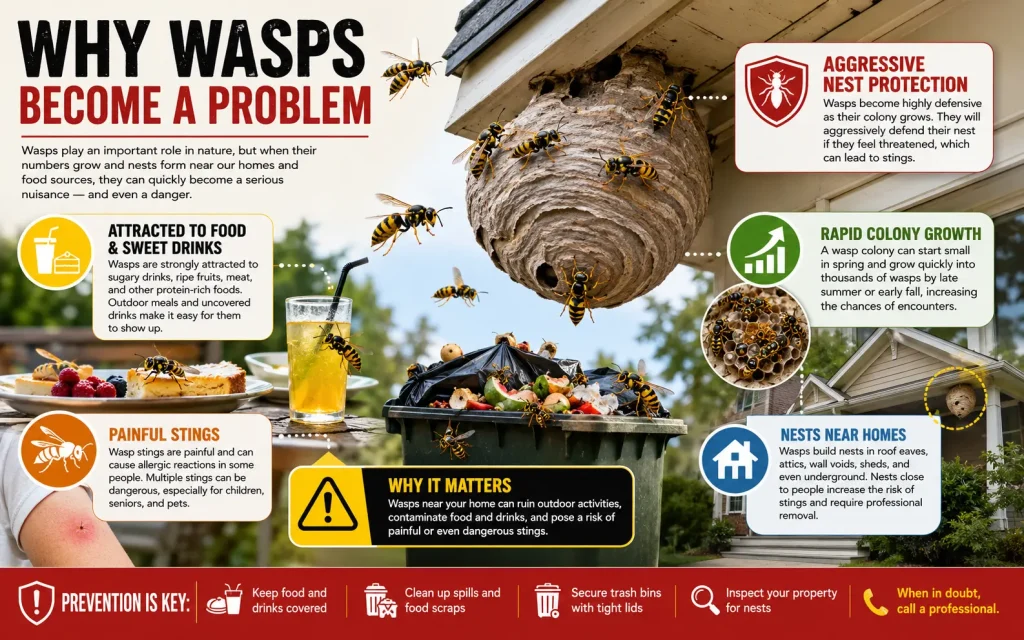
Wasps are beneficial insects that help maintain ecological balance. Many species feed on pests such as caterpillars flies and aphids. However their benefits often become less important when a nest appears near your home.
Unlike bees many wasp species can sting multiple times. They become especially aggressive when they feel their nest is threatened. Large colonies may contain hundreds or even thousands of wasps creating a serious risk for family members visitors and pets.
For individuals with allergies a single sting can even become a medical emergency.
Understanding Different Types of Wasps
Knowing which type of wasp you are dealing with can help determine the best control method.
Paper Wasps
Paper wasps build umbrella shaped nests under roof eaves decks and porches. They are generally less aggressive unless disturbed.
Yellow Jackets
Yellow jackets are among the most aggressive wasp species. They often build nests underground inside wall voids or beneath structures.
Hornets
Hornets are larger than most wasps and create large paper nests in trees shrubs and buildings. They aggressively defend their colonies.
Mud Daubers
Mud daubers build nests from mud and are usually less aggressive than other wasp species.
What Attracts Wasps to Your Property
Before you can eliminate wasps you need to understand what draws them to your yard.
Food Sources
Wasps actively search for food throughout spring summer and early fall.
Common food sources include:
- Sweet drinks
- Fruit juice
- Fallen fruit
- Flower nectar
- Outdoor meals
- Pet food
- Open trash containers
- Meat scraps
Sugary foods attract worker wasps while protein rich foods help feed developing larvae.
Shelter and Nesting Locations
Wasps prefer protected areas where they can build nests safely.
Popular nesting spots include:
- Roof eaves
- Attics
- Garages
- Sheds
- Decks
- Wall cavities
- Play structures
- Trees
- Bushes
Water Sources
Like all living creatures wasps need water.
Common water sources include:
- Bird baths
- Pet water bowls
- Garden ponds
- Leaky faucets
- Standing puddles
- Clogged gutters
Flower Gardens
Bright flowers provide nectar and attract wasps naturally. Colorful landscaping and fragrant blooms can increase wasp activity around your property.
Signs You Have a Wasp Nest Nearby
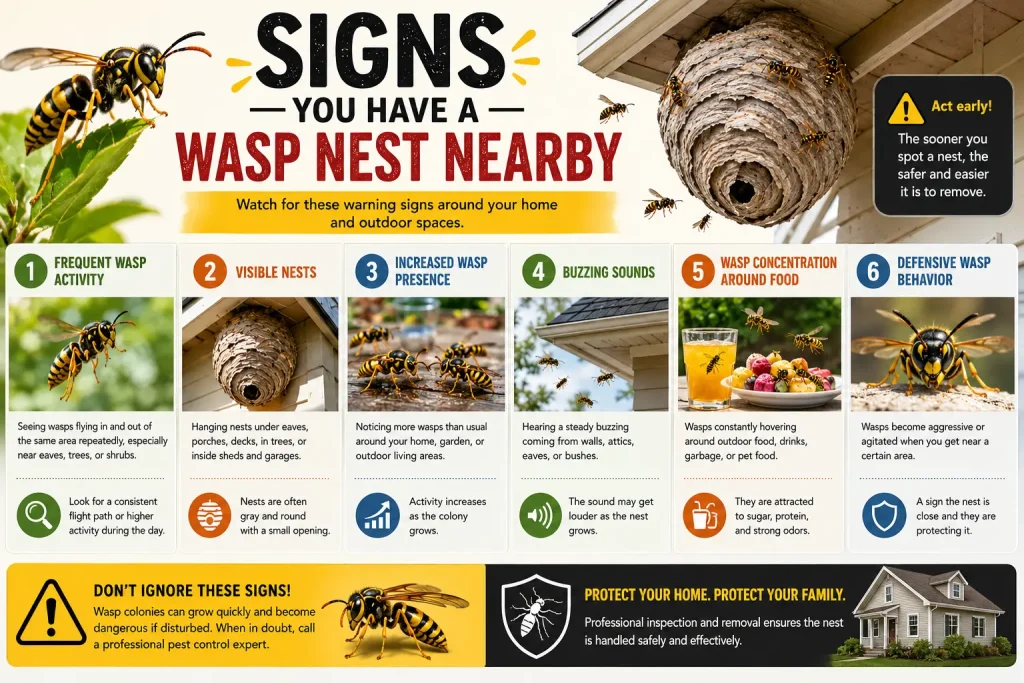
Early detection can prevent a minor issue from becoming a major infestation.
Watch for these warning signs:
- Increased wasp activity around your home
- Wasps flying to and from the same location
- Buzzing sounds in walls ceilings or attics
- Visible paper like nest structures
- Aggressive behavior near specific areas
- Multiple wasps gathering around eaves or rooflines
The sooner you identify a nest the easier it is to address safely.
Natural Ways to Repel Wasps
Many homeowners prefer environmentally friendly solutions before using chemical treatments.
Peppermint Oil Spray
Research has shown that peppermint oil can help deter wasps due to its strong scent.
To create a simple spray:
- Mix a few drops of peppermint oil with water.
- Add a small amount of dish soap.
- Pour into a spray bottle.
- Apply around nesting areas.
Focus on:
- Eaves
- Window frames
- Porch ceilings
- Decks
- Sheds
Plant Wasp Repelling Herbs
Several plants naturally discourage wasps.
Popular options include:
- Citronella
- Lemongrass
- Spearmint
- Eucalyptus
- Basil
- Thyme
Planting these around patios and outdoor seating areas may reduce wasp activity.
Keep Outdoor Spaces Clean
Good sanitation removes many wasp attractants.
Regularly:
- Clean outdoor dining areas
- Remove food scraps
- Wipe up spills
- Store pet food indoors
- Wash garbage containers
- Pick up fallen fruit
How to Prevent Wasps From Building Nests
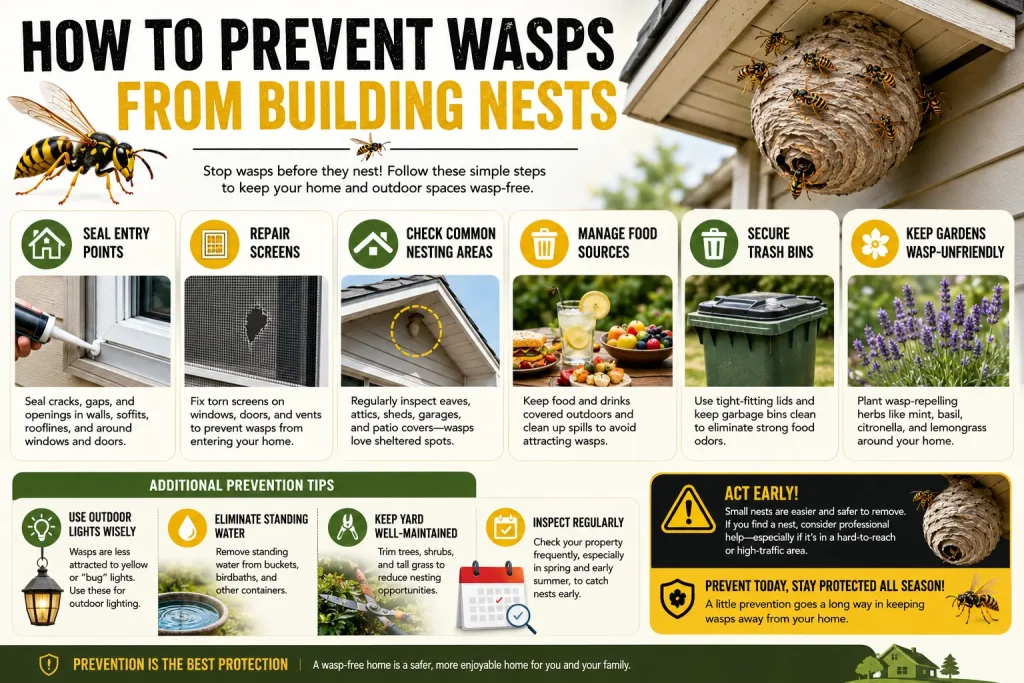
Prevention is usually safer easier and less expensive than nest removal.
Seal Entry Points
Inspect your home for openings such as:
- Cracks in siding
- Damaged screens
- Gaps around doors
- Open vents
- Broken soffits
- Window frame gaps
Sealing these areas reduces nesting opportunities.
Maintain Your Yard
Routine maintenance helps make your property less attractive.
Important tasks include:
- Trimming shrubs
- Pruning trees
- Removing yard debris
- Organizing storage areas
- Cleaning outdoor furniture
- Inspecting sheds and decks
Eliminate Standing Water
Reduce water sources by:
- Cleaning gutters
- Fixing leaks
- Emptying bird baths regularly
- Draining puddles
- Refreshing pet water frequently
Install Decoy Nests
- Some wasp species avoid nesting near existing colonies.
- Hanging realistic decoy nests may discourage new nest construction in certain areas.
How to Remove a Small Wasp Nest Safely
Small newly formed nests are generally easier to handle than mature colonies.
Safety Precautions
Before attempting removal:
- Wear long sleeves
- Wear long pants
- Use gloves
- Wear eye protection
- Keep children away
- Keep pets indoors
Choose the Right Time
Evening and early morning are usually the safest times because wasps are less active.
Apply Wasp Treatment
- Use a wasp specific spray according to label instructions.
- Maintain a safe distance and avoid sudden movements.
- Wait until all activity stops before removing the nest.
Dispose of the Nest
After confirming the colony is inactive:
- Place the nest in a sealed bag
- Dispose of it properly
- Monitor the area for new activity
When to Call a Professional
Some situations require professional assistance.
Contact a pest control expert if:
- The nest is large
- The nest is underground
- The nest is inside walls
- You are allergic to stings
- Multiple nests are present
- Wasps remain active after treatment
Professionals have specialized equipment protective clothing and treatment methods that greatly reduce risk.
Common Mistakes That Make Wasp Problems Worse
Many homeowners accidentally increase wasp activity.
Avoid these mistakes:
Swatting at Wasps
Sudden movements can trigger defensive behavior and attract additional wasps.
Spraying Water on Nests
Water rarely eliminates nests and often provokes the colony.
Ignoring Early Warning Signs
A small nest can grow rapidly during summer.
Leaving Food Uncovered
Outdoor meals provide an easy food source for wasps.
Attempting Removal Without Protection
Even small colonies can become aggressive when disturbed
Seasonal Wasp Prevention Tips
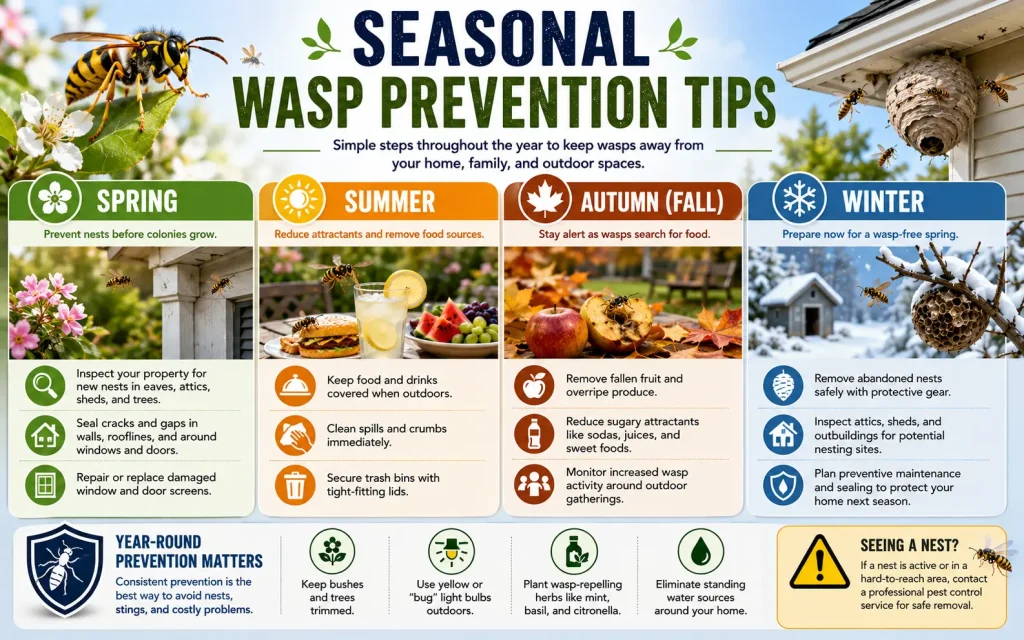
Spring
- Inspect your property weekly
- Remove newly formed nests
- Seal entry points
Summer
- Monitor outdoor food sources
- Keep garbage covered
- Maintain landscaping
Fall
- Remove fallen fruit
- Inspect structures for nests
- Continue monitoring wasp activity
Winter
- Repair damaged screens
- Seal cracks and gaps
- Prepare for next nesting season
Are Wasp Stings Dangerous?
Most people experience:
- Pain
- Redness
- Swelling
- Itching
However severe reactions may include:
- Difficulty breathing
- Dizziness
- Rapid swelling
- Hives
- Anaphylaxis
Seek immediate medical attention if severe symptoms occur.
Expert Tips for Long Term Wasp Control
Pest control professionals recommend:
- Performing monthly inspections
- Removing small nests immediately
- Keeping trash containers sealed
- Using natural repellents regularly
- Repairing structural damage quickly
- Monitoring common nesting areas
Consistency is the key to preventing future infestations.
FAQs
What smell do wasps hate the most?
Peppermint oil is one of the most commonly recommended natural wasp repellents.
Can wasps return to an old nest?
Most wasps do not reuse old nests but new colonies may build nearby.
What time of day are wasps least active?
Early morning and late evening are usually when wasps are least active.
Does vinegar repel wasps?
Vinegar may help discourage wasps in some situations but peppermint oil is generally more effective.
Should I remove a large wasp nest myself?
Large nests should be handled by professionals because of the risk of multiple stings.
Final Thoughts
Getting rid of wasps requires a combination of prevention early detection and proper treatment. Understanding what attracts wasps allows homeowners to remove food water and shelter sources before colonies become established. Natural repellents regular maintenance and routine inspections can significantly reduce wasp activity around your property.
Small nests may sometimes be managed safely with proper precautions. However large hidden or difficult to reach nests should always be handled by professionals. By following the strategies in this guide you can create a safer outdoor environment and enjoy your yard without worrying about painful wasp encounters.
